
What do you call a beehive without an exit?
Unbeeleaveable.
We couldn’t resist.
In honor of National Pollinator Week, we’re sharing the story of an unexpected beekeeping journey that started right here in our own community.
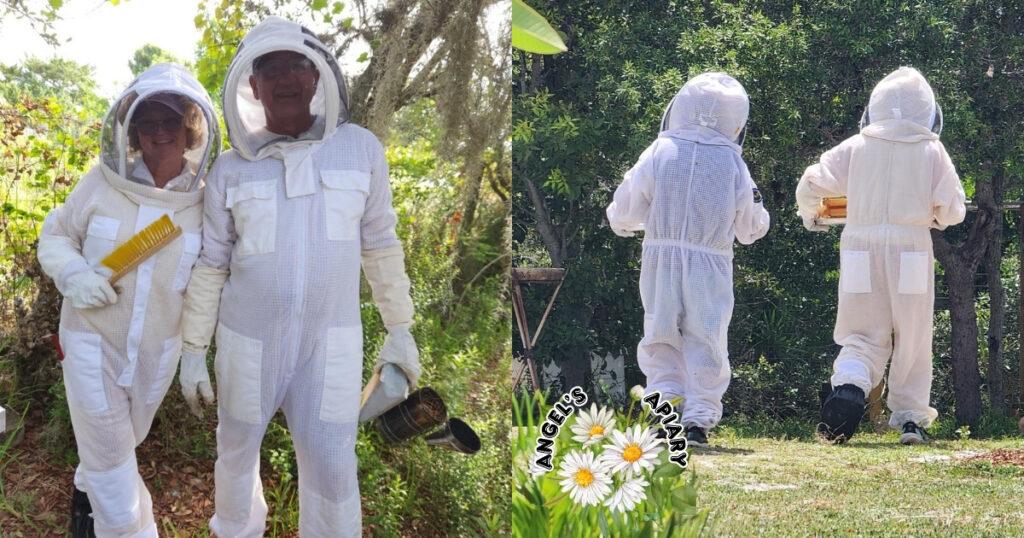
For Lucido & Associates partner Morris Crady and his wife, Angela, beekeeping was never part of the plan. In fact, their introduction to honeybees began with a recurring challenge: swarms of bees repeatedly choosing their Indian River Drive property as a place to settle.
Like many property owners, they could have viewed the bees as a nuisance. Instead, they chose a different approach.
Over the years, Morris and Angela hired no-harm bee removal specialists several times to safely relocate colonies that had established themselves around the property. As they watched the process unfold and learned more about the importance of pollinators, Angela began to wonder if there was another option.
What if the bees didn’t have to leave at all?
After researching beekeeping and learning how to responsibly manage hives, Angela convinced Morris to invest in the equipment, protective gear, and hive boxes needed to welcome future swarms. Morris admits he was skeptical at first, but he was willing to give it a try.
Their first rescued colony, affectionately known as the “shed bees,” became the foundation of a growing apiary. Since then, additional swarms have found their way to the property, and today five thriving hives call the Crady property home.
Some colonies have even become strong enough to split and establish entirely new hive families.
While the occasional jar of local Indian River Drive honey is certainly appreciated, honey was never the primary motivation. The real reward has been supporting pollinators that play a critical role in both natural ecosystems and our everyday lives.
Why Pollinators Matter
Pollinators are responsible for helping more than 75 percent of flowering plants reproduce. They play a vital role in maintaining healthy ecosystems and contribute to the production of many fruits, vegetables, nuts, and seeds that people rely on every day.
While honeybees often receive the spotlight, Florida is home to hundreds of native bee species, along with butterflies, moths, beetles, hummingbirds, and other pollinators that support biodiversity throughout our region.
Creating habitat for pollinators doesn’t require becoming a beekeeper. In many cases, it starts with thoughtful plant selection.
Pollinator-Friendly Plants for the Treasure Coast
Many of the plants that support pollinators are also beautiful additions to residential landscapes, parks, and community spaces. Four of the following species can even be found at Memorial Park in Downtown Stuart.
American Beautyberry (Callicarpa americana)
A favorite among pollinators, American Beautyberry offers attractive flowers, vibrant purple berries, and leaves that have historically been used as a natural mosquito repellent. It adapts well to a range of light conditions, from full sun to full shade, and easily tolerates occasional Florida cold snaps.
Firebush (Hamelia patens var. patens)
One of Florida’s most valuable pollinator plants, Firebush attracts butterflies, bees, and hummingbirds with its bright blooms. Locally native ecotypes are especially important, making proper plant selection worth the extra attention.
Coral Honeysuckle (Lonicera sempervirens)
This well-behaved native vine produces striking flowers that hummingbirds love. The blooms also contain a small amount of edible nectar, making it a favorite among both wildlife and curious gardeners.
Blanket Flower (Gaillardia pulchella)
Bright, colorful, and highly attractive to pollinators, Blanket Flower packs tremendous ecological value into a relatively small plant. Butterflies, bees, and hummingbirds are frequent visitors throughout its blooming season.
Simpson’s Stopper (Myrcianthes fragrans)
Known for its fragrant foliage and edible fruit, Simpson’s Stopper provides valuable forage for bees and other pollinating insects. Its adaptability also makes it an excellent choice for areas near retention ponds and periodically wet landscapes.
Additional Pollinator Favorites
Other excellent pollinator-supporting species include Native Wild Coffee, Walter’s Viburnum, Spanish Needle, Tickseed, and Buttonbush—each providing food, habitat, or seasonal resources for a variety of beneficial insects and wildlife.
Supporting Environmental Stewardship Beyond the Office
Our commitment to environmental stewardship extends beyond the projects we design and the landscapes we help create.
Earlier this year, Lucido & Associates was proud to sponsor the St. Lucie County Earth Day Festival, hosted by the County’s Environmental Resources Department. The event welcomed more than 7,000 attendees for a day of education, exploration, and community engagement focused on environmental awareness and sustainability.
As landscape architects, planners, and environmental professionals, we recognize the important role education plays in building healthier, more resilient communities. Whether it’s supporting local events, promoting native and pollinator-friendly landscapes, or sharing stories like Morris and Angela’s beekeeping journey, we believe small actions can inspire meaningful change.
Events like the Earth Day Festival create opportunities for residents of all ages to learn about the natural systems that support our communities and discover ways they can make a positive impact close to home.
Small Actions, Big Impact
From backyard beehives on Indian River Drive to community events that connect thousands of residents with environmental education, stewardship takes many forms.
For Morris and Angela, it started with a few unexpected visitors and a willingness to learn. For others, it may begin with planting a native shrub, supporting local conservation efforts, or attending an event like the Earth Day Festival.
As we celebrate National Pollinator Week, we’re reminded that healthy communities and healthy ecosystems go hand in hand—and that even small actions can have a lasting impact.


