
In every landscape, there’s a story already being told—by native soils, resilient ecosystems, and centuries-old natural rhythms. At Lucido & Associates, we believe our role isn’t to rewrite that story—but to listen, learn, and design in harmony with it.
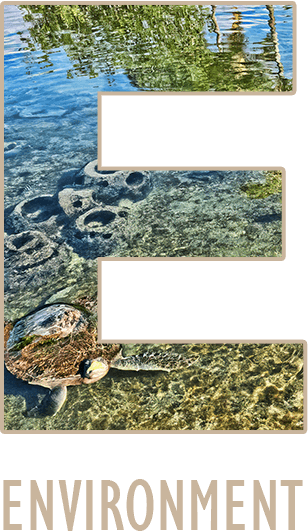
As part of our PLACE philosophy, the “E” stands for Environment—a guiding principle that shapes every project we touch. Designing with the environment at heart means more than just sustainability; it means honoring the natural systems already at work, and crafting spaces that both respect and reinforce ecological resilience.
This post offers a 30,000-foot view of how we approach environmental stewardship through our work—and how that commitment takes shape across a diverse range of projects throughout Florida. In the months ahead, we’ll dive deeper into these stories. But for now, here’s how we let nature lead.
A Landscape Like No Other
Florida isn’t just another place on the map—it’s one of the most ecologically rich and fragile regions in the country. Much of the land we now live on was once part of vast wetland systems—swamps, marshes, and sloughs—that filtered water, prevented flooding, and sustained an extraordinary range of life.
As development has expanded over the decades, these natural systems have been drained, filled, or fragmented. And with that loss comes real consequence: declining water quality, diminished biodiversity, and increased vulnerability to storms and sea-level rise.
Nowhere is this more evident than in the Indian River Lagoon—a 156-mile-long estuary that’s among the most biologically diverse in North America. Home to more than 4,000 species of plants and animals, including manatees, sea turtles, and countless fish nurseries, the lagoon is a life source for Florida’s ecosystems and coastal economies alike.
But it’s also in peril. Polluted runoff, shoreline hardening, and loss of native habitat have pushed the lagoon to a tipping point. That’s why our work, especially along the Treasure Coast, embraces the responsibility to restore balance. Every native plant we place, every bioswale we build, and every shoreline we protect is a small but meaningful step toward a more resilient future.
Designing with Nature, Not Against It
Every site we work with has its own ecological fingerprint. Our job is to understand it—and then elevate it.
From coastal dune systems to inland wetlands, we design with an understanding that every decision made above ground affects what lies beneath. That’s why our landscapes prioritize native plantings, protect and restore hydrological function, and integrate with—not override—existing topography. Whether it’s reshaping a public space or planning a commercial corridor, our approach centers on long-term environmental viability.
We don’t see constraints—we see context. And that perspective allows us to shape places that are not only beautiful, but ecologically honest.
Restoring and Reinforcing Ecosystems
In many cases, our work begins with land that has been overlooked, overused, or altered by time and development. But we see every project as an opportunity to repair and renew.
From bioswales that improve water quality to pollinator corridors that support biodiversity, we integrate ecological strategies that help landscapes thrive beyond aesthetics. These are not add-ons or afterthoughts—they’re built into our design DNA.
Environmental design at Lucido means considering both what exists and what’s possible—and making choices that move the needle toward regeneration.
Project Spotlights: When Environment Shapes Experience
Florida Oceanographic Society
Located on Hutchinson Island, this project is more than just a campus—it’s a living classroom for environmental education and coastal resilience. Our design blends seamlessly with the surrounding estuary, using native plantings and regionally appropriate materials to enhance both form and function.
The result is a space that teaches by doing. Trails, exhibits, and outdoor classrooms immerse visitors in Florida’s fragile coastal ecosystems—reinforcing the Society’s mission while preserving the land that supports it.
Memorial Park
A beloved public space reimagined through green infrastructure. Here, bioswales and native vegetation work quietly below the surface, managing stormwater and filtering runoff before it enters nearby waterways.
But the impact is felt above ground, too—where gathering spaces, trails, and open lawns create a sense of place that’s rooted in community and environmental performance. It’s a model for how functional ecology and human experience can coexist, beautifully.
Kanner CPUD (Commercial/Residential Context)
Designing for sustainability in a commercial setting isn’t just possible—it’s essential. This project features a 100% native plant palette within a bustling mixed-use development, proving that ecological integrity can thrive even in high-traffic spaces.
By reducing irrigation needs, increasing habitat value, and simplifying long-term maintenance, this project sets a new standard for resilient, regenerative commercial landscapes.
Conchy Joe’s
This wasn’t just a restaurant renovation—it was an opportunity to preserve a legacy. When we were brought in to expand this iconic waterfront destination, we made it a priority to honor the site’s natural assets: a thriving canopy of mature trees, a living shoreline, and a character that’s deeply tied to its environment.
We reoriented the guest experience to deepen the connection to the river, enhanced the landscape with native materials, and carefully preserved the ecological buffers that define the site. Conchy Joe’s is a perfect example of PLACE in action—where People, Landscape, and Environment work together to strengthen both identity and impact.
👉 Read more about the project
Why Environment Matters to Us All
Whether it’s a nature center, a park, or a commercial property, every space has the potential to contribute to environmental resilience. Our commitment to the “E” in PLACE ensures that we treat each project as part of a larger ecological system—where every plant, pathway, and grading decision plays a role.
Design can—and should—do more than meet the eye. When it respects the land, design becomes a form of stewardship. And when we let nature lead, the results are places that feel more grounded, more enduring, and more alive.


